









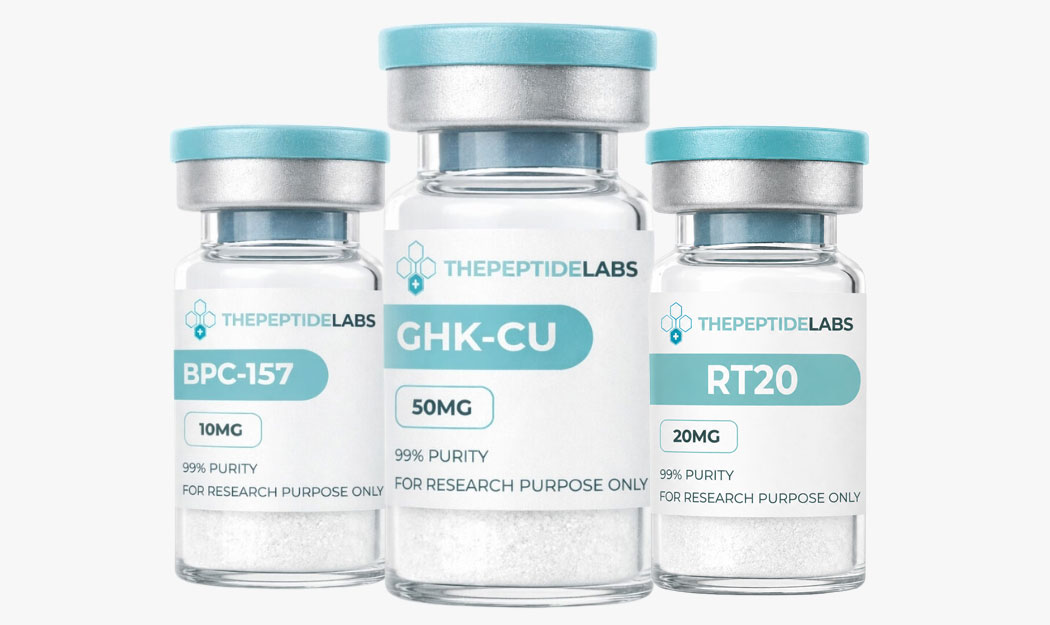
In modern scientific research, accuracy, reproducibility, and chemical integrity form the foundation of reliable experimental outcomes. Laboratories working in biotechnology, pharmacology, and molecular biology depend on high-quality materials that meet strict verification standards. Within this environment, Lab Tested Research Peptides play a critical role by offering dependable, well-characterized compounds that have undergone rigorous laboratory analysis. These peptides ensure that researchers can conduct experiments with confidence, knowing their materials meet strict purity and identity requirements.
What are Lab Tested Research Peptides?
Lab tested research peptides are short chains of amino acids synthesized specifically for scientific investigation and verified through detailed laboratory testing. These compounds are not intended for human or animal use but are designed strictly for controlled research environments.
Each peptide is produced through advanced chemical synthesis methods and then subjected to multiple analytical tests. These tests confirm molecular structure, purity, and consistency. The result is a research-grade material that meets strict scientific standards and supports accurate experimental work.
Importance of Verified Laboratory Analysis?
Verified laboratory analysis is essential because it ensures that peptides meet defined quality benchmarks before being used in research. Without proper verification, impurities or structural inconsistencies could distort experimental results.
Laboratory analysis typically includes testing for purity, molecular weight confirmation, and contamination screening. These processes ensure that each peptide batch is consistent and reliable.
Verified analysis also supports reproducibility, allowing researchers to repeat experiments and achieve the same results under identical conditions.
How Lab Tested Research Peptides Are Produced?
The production process begins with solid-phase peptide synthesis, a method that allows precise control over amino acid sequencing. This ensures that each peptide is built according to its intended structure.
After synthesis, peptides undergo purification processes such as high-performance liquid chromatography. This step removes unwanted byproducts and isolates the desired compound.
Once purified, peptides are analyzed using advanced techniques like mass spectrometry and amino acid sequencing to confirm their identity and structural accuracy.
Role of Quality Control in Peptide Testing?
Quality control is a vital part of producing lab tested research peptides. It ensures that every batch meets strict scientific and analytical standards before being released for research use.
Quality control includes raw material inspection, synthesis monitoring, purification validation, and final product testing. Each stage is carefully documented for traceability and reliability.
This structured approach guarantees consistency across batches, allowing researchers to rely on uniform results in their experiments.
Why Purity Matters in Research Peptides?
Purity is one of the most important factors in determining peptide quality. Even small impurities can interfere with chemical reactions and lead to inaccurate results.
High purity ensures that peptides behave exactly as expected in controlled experiments. This allows researchers to isolate variables and study specific biological processes with precision.
Lab tested peptides typically maintain very high purity levels, ensuring dependable and reproducible scientific outcomes.
Analytical Techniques Used in Verification?
Several advanced analytical techniques are used to verify the quality of lab tested research peptides. High-performance liquid chromatography is commonly used to separate and measure peptide components.
Mass spectrometry provides detailed molecular weight information and confirms structural identity. Nuclear magnetic resonance spectroscopy may also be used to analyze molecular configuration.
These techniques work together to create a complete quality profile for each peptide batch, ensuring accuracy and reliability.
Importance of Consistency in Research Applications?
Consistency is essential in scientific research because it ensures that experimental results can be reproduced over time. Lab tested research peptides provide uniformity across all batches.
Without consistency, researchers may face variations in experimental outcomes, making it difficult to validate findings. Reliable peptides eliminate this problem by maintaining stable composition and performance.
This is particularly important in long-term studies that require repeated use of the same compounds.
Applications in Scientific Research?
Lab tested research peptides are widely used across multiple scientific disciplines. In molecular biology, they help study protein interactions and cellular mechanisms.
In pharmacology, they are used to analyze biochemical pathways and receptor behavior. Biotechnology researchers use peptides to explore cellular processes and develop experimental models.
Their versatility makes them essential tools in modern laboratory research.
Storage and Stability Considerations?
Proper storage is essential for maintaining peptide stability and effectiveness. Environmental factors such as temperature, humidity, and light exposure can affect peptide integrity.
Lab tested peptides are typically stored under controlled conditions such as refrigeration or freezing to preserve stability. Suppliers often provide detailed storage instructions to ensure optimal performance.
Stability testing is conducted during production to determine how peptides behave under different environmental conditions.
Safety and Handling Guidelines?
Lab tested research peptides are strictly intended for laboratory research use and must not be used for human or animal consumption. Proper handling procedures are essential to ensure safety.
Researchers must use protective equipment such as gloves, lab coats, and safety protocols when handling peptides. Proper labeling and storage are also required.
Following these guidelines ensures responsible use and prevents contamination or misuse in laboratory environments.
Technological Advancements in Peptide Analysis?
Advancements in technology have significantly improved the accuracy and efficiency of peptide analysis. Automated synthesis systems allow precise control over amino acid sequencing.
Modern analytical instruments provide faster and more accurate results, improving overall quality assurance. Artificial intelligence is increasingly used to optimize synthesis processes and improve data analysis.
These innovations enhance reliability, reduce errors, and improve scalability in peptide production.
Importance in Academic and Industrial Research?
Lab tested research peptides are widely used in both academic and industrial research environments. Universities use them for teaching and experimental studies, while industries use them for innovation and product development.
Their availability supports scientific discovery and helps researchers explore new biological mechanisms.
Reliable peptide supply ensures continuity in research projects and supports advancements across multiple scientific fields.
Future of Lab Tested Research Peptides?
The future of lab tested research peptides is expected to evolve with advancements in automation, artificial intelligence, and biotechnology.
AI-driven systems may assist in peptide design, synthesis optimization, and predictive analysis. Digital tracking systems may further improve transparency and quality verification.
These developments will enhance accuracy, efficiency, and reliability in peptide research and production.
Conclusion
Lab tested research peptides represent a vital component of modern scientific investigation, offering dependable materials supported by verified laboratory analysis. Through strict quality control, advanced analytical techniques, and precise synthesis methods, these peptides ensure accuracy and reproducibility in research.
As technology continues to advance, lab tested peptides will become even more refined, supporting innovation and discovery across biotechnology, pharmacology, and molecular science.