






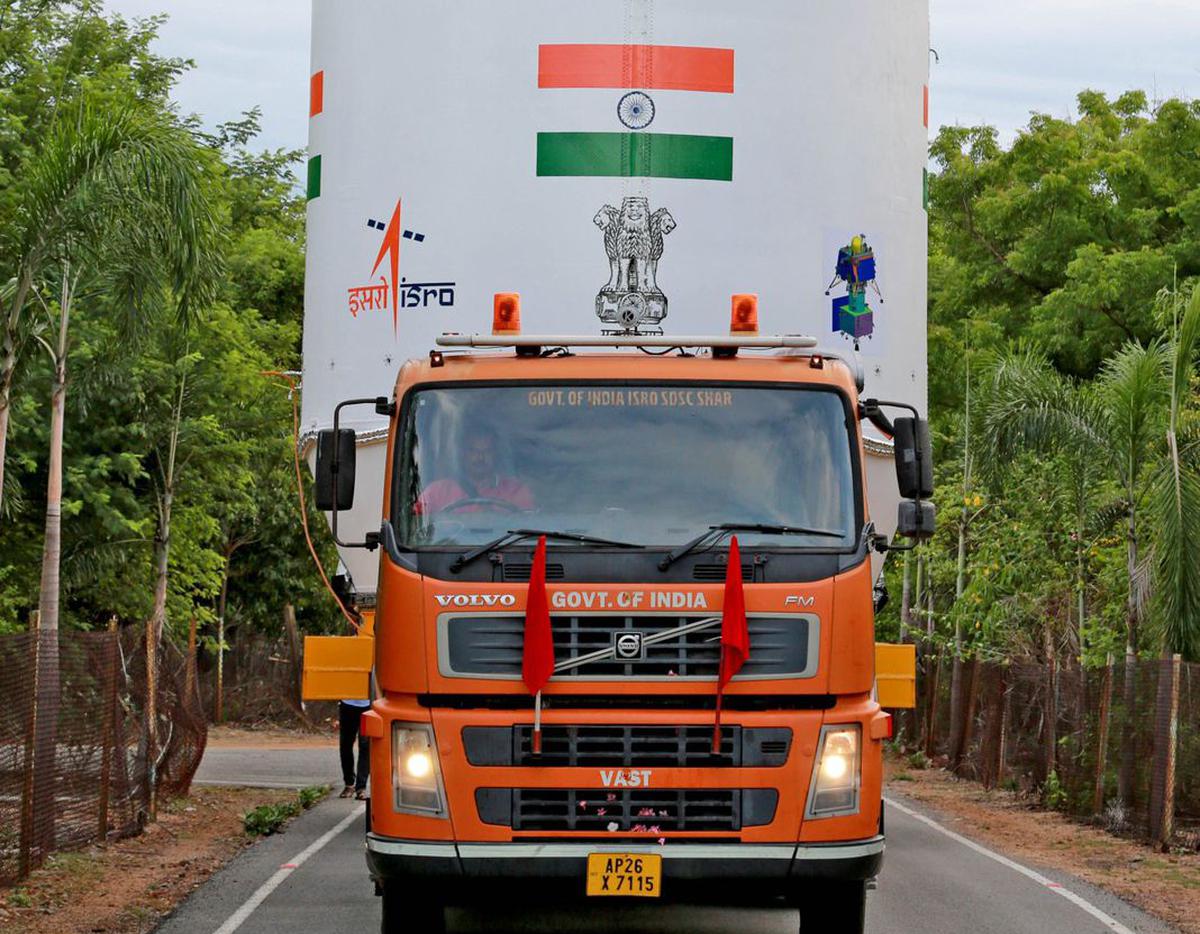
The Chandrayaan-1 mission was India’s first mission to the moon, launched on October 21, 2008. This historic event marked a significant milestone in India’s space exploration efforts.
Overview of Chandrayaan-1
The Chandrayaan-1 mission, launched on October 21, 2008, marked a significant milestone for India’s space exploration endeavors. This mission, India’s first to the moon, was pivotal in establishing the Indian Space Research Organisation (ISRO) as a formidable player in the global space arena.
Equipped with an array of scientific instruments, Chandrayaan-1 was designed to explore the lunar surface and gather crucial data about the moon’s composition. Among its notable achievements was the discovery of water molecules on the moon, a groundbreaking finding that altered our understanding of the lunar environment.
The spacecraft orbited the moon for nearly ten months, during which it successfully completed over 3400 orbits. The mission not only expanded scientific knowledge but also inspired a new generation of scientists and engineers in India.
Chandrayaan-1 was a collaborative effort, involving contributions from various international space agencies. Its success laid the groundwork for subsequent missions, including Chandrayaan-2, further solidifying India’s position in lunar exploration.
In summary, the Chandrayaan-1 mission is celebrated not just for its achievements but also for its role in igniting curiosity and ambition in the field of space science in India.
Significance of India’s Moon Mission
The Chandrayaan-1 mission marked a pivotal moment in India’s space exploration history, showcasing the nation’s technological advancements and commitment to scientific research. Launched on October 21, 2008, this mission not only aimed to explore the lunar surface but also played a crucial role in enhancing India’s position in the global space community.
One of the significant achievements of the Chandrayaan-1 mission was the discovery of water molecules on the moon, which has profound implications for future lunar exploration and potential colonization. This discovery underscored the mission’s importance in understanding the moon’s geology and the possibility of using lunar resources for human exploration.
Moreover, the mission helped India develop critical capabilities in satellite technology and interplanetary exploration. The successful deployment of the orbiter and its innovative instruments demonstrated India’s growing prowess in space science.
In addition to scientific advancements, the Chandrayaan-1 mission inspired a new generation of scientists and engineers in India, fostering interest in STEM fields and encouraging collaboration within the international space community. As a result, it laid a strong foundation for future missions, including the upcoming Chandrayaan-3.
Key Objectives of the Chandrayaan-1 Mission
The Chandrayaan-1 mission was designed with several key objectives that aimed to enhance our understanding of the Moon and its resources. The mission sought to achieve the following:
- High-Resolution Mapping: One of the primary goals was to create a detailed three-dimensional map of the Moon’s surface, which would help in identifying potential landing sites for future missions.
- Mineral and Chemical Analysis: The mission aimed to analyze the mineral composition of the lunar surface, providing insights into the Moon’s geology and formation.
- Water Ice Detection: A significant objective was to search for water ice in the permanently shadowed regions of the lunar poles, which could have implications for future exploration and utilization.
- Study of Lunar Atmosphere: The mission intended to investigate the thin lunar atmosphere, providing data on its composition and dynamics.
- Mapping of Elements and Minerals: Chandrayaan-1 sought to map the distribution of elements and minerals on the lunar surface, enhancing our knowledge of the Moon’s history.
These objectives collectively positioned the Chandrayaan-1 mission as a groundbreaking endeavor in lunar exploration.
Achievements of Chandrayaan-1
The Chandrayaan-1 mission marked a significant milestone in India’s space exploration efforts, achieving numerous remarkable feats during its operational period.
Some of the key achievements of the mission include:
- First Indian Mission to the Moon: Chandrayaan-1 was India’s inaugural attempt to explore the lunar surface, showcasing the country’s growing capabilities in space technology.
- Lunar Surface Mapping: The mission successfully created detailed three-dimensional maps of the Moon’s surface, providing invaluable data for future lunar explorations.
- Water Ice Discovery: One of the most groundbreaking discoveries was the detection of water molecules in the lunar soil, a finding that has implications for future human missions.
- High-Resolution Imaging: The onboard cameras captured stunning high-resolution images of the Moon, contributing to various scientific studies and enhancing our understanding of its geology.
- International Collaboration: The mission involved partnerships with several international space agencies, fostering collaboration and knowledge sharing in the field of planetary science.
Overall, the Chandrayaan-1 mission not only established India as a serious player in space exploration but also paved the way for future lunar missions.
Impact on Future Space Missions
The Chandrayaan-1 mission has had a profound impact on the landscape of future space exploration missions. Launched on October 21, 2008, this pioneering effort not only marked India’s entry into lunar exploration but also set a benchmark for subsequent missions by other nations.
One of the primary contributions of the Chandrayaan-1 mission is its role in demonstrating the capability of Indian Space Research Organisation (ISRO) in executing complex space missions. The success of Chandrayaan-1 inspired confidence in India’s technological prowess and motivated other countries to collaborate with ISRO for future projects.
In addition, the data collected during this mission, including detailed lunar maps and mineral compositions, has paved the way for more ambitious lunar explorations. Key findings, such as the presence of water molecules on the moon’s surface, have sparked renewed interest in lunar research and potential resource utilization.
Future missions, such as Chandrayaan-2 and international lunar projects, have built upon the insights gained from the Chandrayaan-1 mission, showcasing its lasting legacy in shaping the future of space exploration.
Chandrayaan-1 Mission Timeline
The Chandrayaan-1 mission marked a significant milestone in India’s space exploration journey. Launched on October 22, 2008, it was the country’s first mission to the moon, aiming to enhance our understanding of lunar geography and mineral composition.
The timeline of the mission includes several key events:
- October 22, 2008: The Chandrayaan-1 spacecraft was launched from Satish Dhawan Space Centre in Sriharikota, India.
- November 8, 2008: The spacecraft successfully entered lunar orbit, a critical step in its mission.
- November 14, 2008: The mission achieved a historic milestone by discovering water molecules on the lunar surface.
- February 2009: Chandrayaan-1 completed its primary mission objectives and continued to gather valuable data.
- August 29, 2009: Communication with Chandrayaan-1 was lost, but the mission had already exceeded expectations.
Overall, the Chandrayaan-1 mission laid the groundwork for future lunar exploration and showcased India’s growing capabilities in space technology.
By Truckjunction via Openverse